How Much Does a Business Website Cost in Egypt in 2026? A Practical Pricing Guide
Understand what drives website prices, the running costs people forget, and how to request quotes you can actually compare.

In this article27
"How much does a website cost?" is usually the first question a business owner asks, and the honest answer — "it depends" — is also the least helpful one. This guide explains what actually drives website design cost in Egypt in 2026, what ranges providers publish, which running costs people forget, and how to request quotes you can compare like for like.
One note before we start: the price ranges below are taken from price lists that Egyptian providers publish openly. They are a market snapshot, not a quote and not ANTAR's price list. Your scope is what decides the real number.
Why website prices in Egypt vary so much
If you ask five providers for a "company website", you may receive five quotes where the most expensive is ten times the cheapest. That does not necessarily mean someone is overcharging. Usually the five providers are pricing five different products under the same name:
- One is installing a ready-made template and changing the logo and colours.
- One is customising a template and adding a contact form and WhatsApp button.
- One is designing pages from scratch around your brand and content.
- One is building a custom system with an admin panel, user accounts and integrations.
- One includes copywriting, photography, SEO setup and a year of support; the others do not.
The fix is not to choose the middle price. The fix is to define the scope clearly so every provider prices the same thing.
The 8 factors that determine the cost
1. Website type
A one-page landing page for a campaign, a five-to-ten-page company profile, an online store and a booking platform are completely different amounts of work. The type sets the baseline before anything else.
2. Template or custom design
A template saves design time but limits you to its structure. A custom design starts with your users, your content and your brand, which takes more hours for research, wireframes and visual design. For many small businesses a well-chosen template is a sensible start; for brands competing on trust and differentiation, custom design usually pays back.
3. Number of pages and amount of content
Each unique page layout needs design and development. Repeated pages built from the same layout (for example, 30 product pages) cost far less per page than 10 completely different layouts.
4. Features and integrations
This is where budgets grow fastest. Online payment, shipping calculation, booking calendars, customer accounts, multi-branch inventory, CRM or ERP integration, and custom dashboards each add design, development and testing time — and more testing means more cost.
5. Languages and right-to-left support
An Arabic and English site is not just "translated text". Right-to-left layouts, mirrored icons, separate URLs, metadata in both languages and content management for each language all need work. Done properly, bilingual support can add a noticeable share to the build.
6. Content: who writes and photographs it?
Many projects get delayed — and quietly more expensive — because content is not ready. Professional copywriting, product photography and translation are real costs. Decide early whether you provide them or the provider does.
7. Technology and admin panel
A content management system (such as WordPress) is fast to launch and easy to edit. A custom-built application gives full control and fits unusual workflows, but needs more development. The right choice depends on what you need to manage, not on what is fashionable.
8. Quality standards you can't see at first
Performance, security, accessibility and technical SEO are invisible on day one and very visible six months later. Google documents how page experience signals such as Core Web Vitals measure loading speed, interactivity and visual stability. A cheap site that fails these basics often costs more to fix than to build correctly.
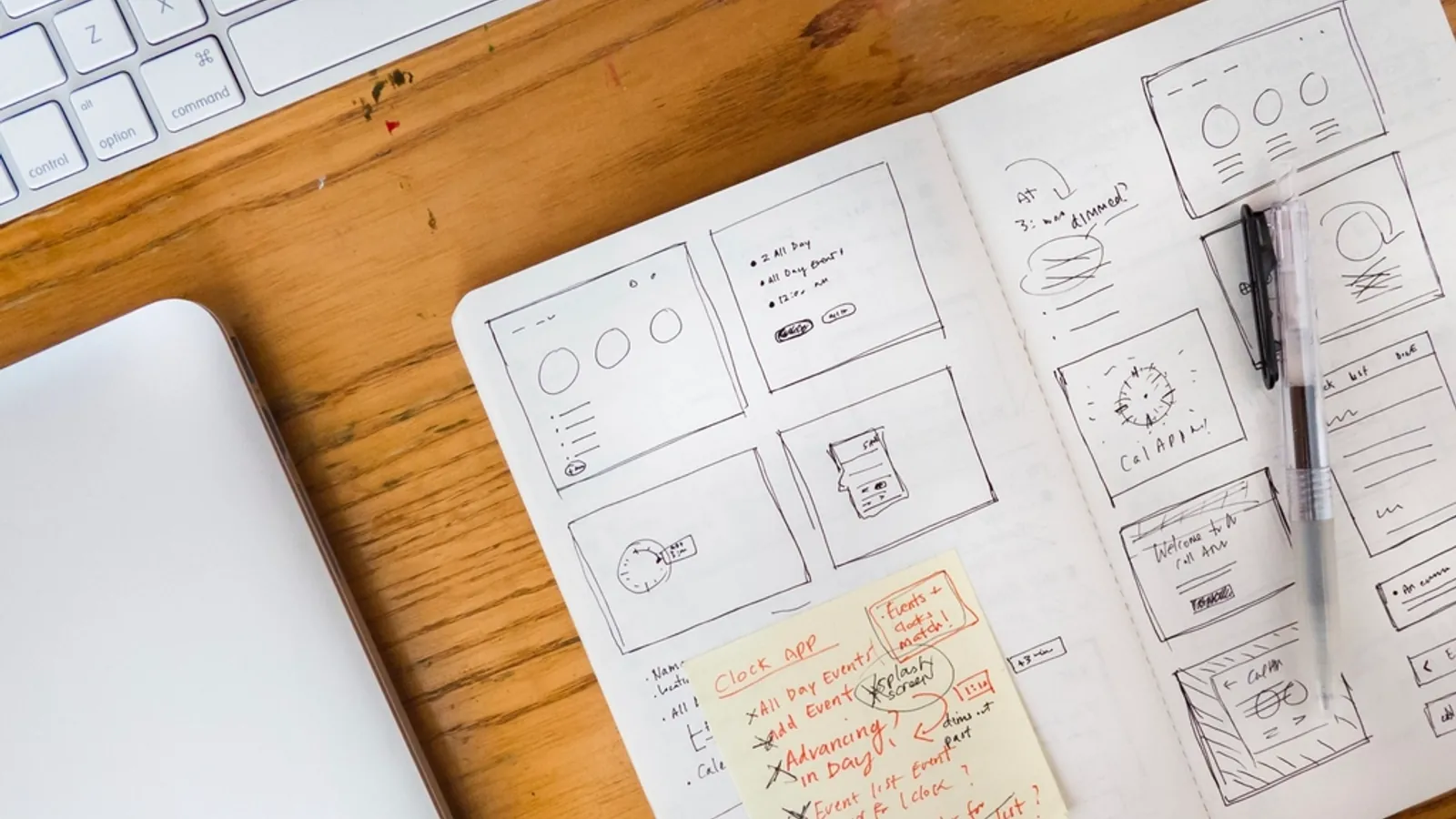
Published price ranges in Egypt (2026)
To give you a sense of the market, I reviewed price pages that Egyptian web design providers published in 2026. The table summarises the broad ranges they show. Treat it as orientation only: providers define packages differently, and the same label can hide very different scopes.
| Website type | Typical published range (EGP) | What usually changes the price |
|---|---|---|
| Landing page / simple site | From roughly 5,000 to 15,000 | Template vs custom design, copywriting, forms |
| Company profile website | Roughly 10,000 to 60,000 | Number of layouts, bilingual support, CMS, content |
| Online store | Roughly 15,000 to 120,000+ | Payment and shipping, product count, custom features |
| Custom platform or web application | Often 70,000 and above, can reach several hundred thousand | Business logic, user roles, integrations, scale |
Two things stand out. First, the ranges overlap heavily — a "company website" at the top of its range can cost more than a basic store. Second, the lowest prices almost always assume a template, your own content and minimal revisions. That is not wrong, but it should be clear in writing.
Running costs most people forget
The build is a one-time cost. A website also has recurring costs that belong in your budget from the start:
- Domain name: renewed yearly. Local extensions such as .eg or .com.eg are priced differently from .com.
- Hosting: from shared hosting for small sites to cloud or dedicated servers for stores and applications. Cheap hosting is a common cause of slow sites.
- SSL certificate: often free through the hosting provider, but must be configured and renewed.
- Business email: usually priced per user per month.
- Maintenance and updates: security updates, backups, plugin or framework upgrades and small changes. Agree on this before launch, either as a monthly plan or per request.
- Paid plugins, themes or services: some are annual subscriptions.
- Payment gateway fees: for stores, a percentage or fixed fee per transaction set by the payment provider.
Hidden costs and red flags in quotes
Watch for quotes that leave the following undefined. Each is a common source of disputes and surprise invoices:
- Unlimited revisions: sounds generous, usually means the scope was never fixed. Prefer a clear number of revision rounds per stage.
- Ownership: who owns the domain, hosting account, source code and design files? The answer should be you.
- Content entry: is uploading 200 products included, or charged separately?
- Training and handover: will someone show your team how to update the site?
- Post-launch bug fixing: how long are defects fixed free of charge?
How to request quotes you can compare
A short written brief removes most of the price spread. It does not need to be technical. Include:
- Goal: what should the website achieve? (Enquiries, online orders, bookings, credibility.)
- Audience: who are your customers, and do you need Arabic, English or both?
- Pages: a simple list, for example Home, About, Services (6), Projects, Blog, Contact.
- Features: forms, WhatsApp, payment, booking, accounts, integrations.
- Content: what you will provide and what you need help with.
- Examples: two or three sites you like, and why.
- Budget range and deadline: sharing a range helps providers propose the right solution instead of guessing.
Then ask every provider to answer the same questions: what exactly is included, how many revision rounds, what the timeline is, who owns what, and what happens after launch. If you are still deciding who to work with, the guide on how to choose a web development company in Egypt walks through the evaluation step by step.
Three example scenarios
These scenarios show how scope, not the label, drives cost. They are illustrations, not quotes.
A clinic that needs bookings
A clinic in Cairo wants a bilingual site with doctor profiles and online booking. The booking calendar, reminders and admin screens add more to the cost than the pages themselves. A simpler first version might use a booking form and WhatsApp confirmation, with full online booking added later.
A small store moving online
A shop selling 150 products wants to accept online payments and deliver across governorates. The decisive questions are product data entry, payment gateway setup, shipping rules and who handles product photos. The design may be the smallest part of the budget.
A B2B company that needs credibility
An industrial supplier mostly needs trust: clear services, projects, certifications they actually hold, and a fast contact path. Here, investment in content and a clean, fast design matters more than complex features. You can see how this looks in practice in projects like the KB Media company website.
Building new vs redesigning an existing site
If you already have a site, a redesign may cost less than starting over — or more, if old content and URLs need careful migration. Before deciding, check the warning signs in 10 signs your business website needs a redesign. Also remember that much of a site's long-term value comes from design decisions that support users; the difference between UI and UX explains why both matter.
Frequently asked questions
What is the cheapest way to get a professional website?
A well-chosen template, your own prepared content, a small number of pages and a clear brief. Cheap does not have to mean poor, as long as performance, mobile layout and ownership are handled properly.
How long does building a website take?
A simple site can take a few weeks; a store or custom platform often takes a few months. Content readiness and feedback speed affect the timeline as much as development does.
Do I have to pay every year?
The build is typically paid once. Domain, hosting, email and maintenance are recurring. Ask for these as separate lines so you can see the yearly running cost.
Is it better to pay a fixed price or by the hour?
Fixed price works well when the scope is clear. Time-based billing suits evolving products. Many projects combine a fixed first version with paid changes afterwards.
Is SEO included in the website price?
Technical SEO basics — clean URLs, titles, metadata, speed and mobile layout — should be part of any professional build. Ongoing SEO work such as content and link building is a separate service.
Conclusion
Website cost in Egypt depends far more on scope than on the word "website". Define the goal, pages, features and content first; budget for running costs as well as the build; and insist that quotes spell out ownership, revisions and support. Do that, and the price differences between providers will finally make sense.
Request a Website Development Consultation
If you want help turning your idea into a clear scope and a realistic budget, I can review your requirements and suggest the most sensible first version. See the software and web development service, or request a website development consultation.
 Software & Web Development
Choose the Right Web Development Company in Egypt: A Practical Evaluation Guide
Clear questions and criteria to compare agencies and developers: portfolio, technical depth, ownership, contracts and post-launch support.Read Article Software & Web Development
Keep Your Business Website Fast and Secure: A Practical Maintenance Guide
What to check regularly after launch (updates, tested backups, forms, SSL, domain and speed) so your website keeps working for your business.Read Article Software & Web Development
Comments
No comments yet. Share your thoughts or questions.
Leave a comment
Comments are reviewed before they appear.